How to Verify Real Production Capacity of A Manufacturer: Factory Size Is Not Everything
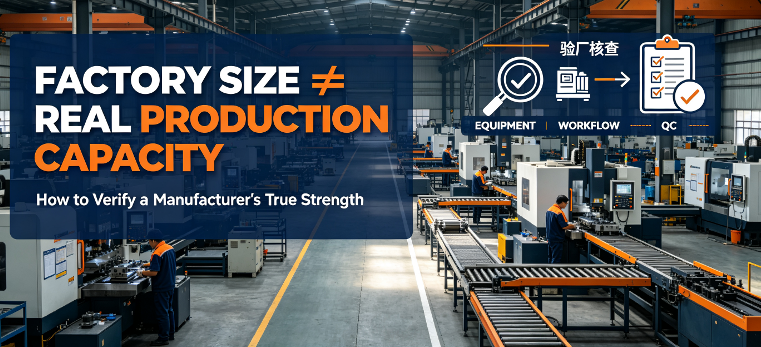
Many overseas buyers tend to take factory building size as the primary standard when sourcing castings and engineering machinery components. Industry experts remind that spacious workshops and impressive factory appearances only reflect site conditions, rather than genuine mass‑production and delivery capacity. Buyers may easily get misled by “showcase‑oriented factories”.In cross‑border manufacturing supply chains, some so‑called factories rent large‑size premises with well‑decorated showrooms and offices. However, their core casting and processing procedures are fully outsourced. Such companies mainly focus on order receiving, sample display and business communication. Their on‑site equipment stays idle with little in‑house mass production. Impressed by the grand site, clients may mistake them for full‑range in‑house manufacturers. This will later result in risks including delayed lead‑time, unstable product quality and uncontrollable costs.What aspects shall overseas buyers check to objectively evaluate a manufacturer’s real production strength?1. Check in‑house core production equipment and actual operating statusDo not rely merely on equipment lists or promotional photos. Request virtual factory tour via video or arrange on‑site audit. Inspect the full‑process production equipment for your target products. Confirm whether key processes are completed in‑house. Distinguish equipment for daily serial production from display‑only units for customer visits. Supply‑chain risks will rise sharply if most critical steps have to be outsourced to third‑party workshops.2. Observe material flow inside workshopsWorkshops with stable mass‑production capacity keep continuous circulation of raw materials, wax patterns, casting semi‑finished parts, machined components and finished goods ready for shipment. If the production floor looks empty with only limited samples on show, be alert to insufficient mass‑production capability even with a huge plant area.3. Tell the difference between sampling capability and mass‑supply capabilityWell‑finished samples do not guarantee consistent quality in bulk orders. Buyers may ask for historical mass‑production project references, shipment photos and records of long‑term clients. Focus on lead‑time performance and defect control from previous large‑volume orders to assess the manufacturer’s experience in serial delivery.4. Evaluate in‑house inspection hardware and quality‑control teamReliable physical manufacturers equip themselves with self‑owned testing devices and dedicated QC staff, to independently conduct material analysis, dimensional inspection and performance tests. If the factory totally relies on external third‑party labs, stable quality for bulk orders can hardly be guaranteed without internal quality‑management systems.5. Pay attention to front‑line production staffingA typical feature of outsourcing‑oriented trading factories is large plant space but few production workers, with sales staff taking up most of the headcount. Genuine manufacturers maintain stable production teams and mature shift schedules to secure on‑time order fulfillment.Industry specialists recommend that during factory audits, buyers should not only visit showrooms and reception areas. Walk through real production floors to witness actual manufacturing activities. This helps you effectively tell apart trading intermediaries from authentic source manufacturers and avoid potential supply‑chain risks.