The Process Optimization Project of the Company’s Precision Casting Section Successfully Completed
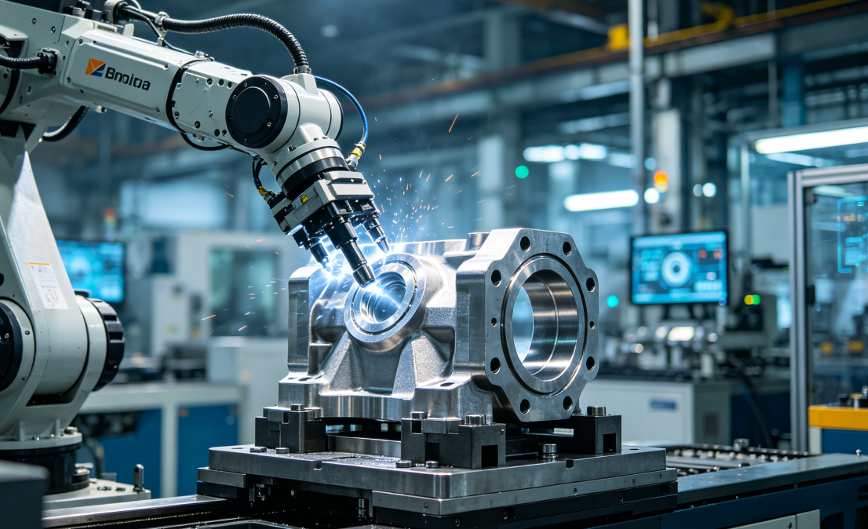
To meet the production standards for high-end parts, solve common production pain points of traditional precision casting including unstable wax pattern forming, high porosity of castings and high energy consumption, and consolidate the company’s high-end precision manufacturing capacity foundation, the Production & Manufacturing Center, jointly with the Technology R&D Department and Quality Management Department, has recently completed the full-process process upgrading and refined equipment commissioning for precision casting. The completion of this technical renovation has realized a dual improvement in product yield and production efficiency of the section, achieving the phased technical renovation targets successfully.Centering on five core working procedures including wax pattern preparation, shell firing, vacuum smelting, pouring & cooling, and post-processing, this optimization carries out localized upgrading based on the company’s existing silica sol precision casting production line. In the early stage, combined with the recent production data of outsourced high-end parts and engineering machinery precision fittings, the technical team sorted out six major production difficulties such as forming defects of thin-walled special-shaped castings, shell cracking and inaccurate smelting temperature control. The team organized team backbones and process engineers to conduct more than 20 proportion tests and parameter debugging, optimized three key process parameters including surface coating proportion, curing time and graded firing temperature, and calibrated the temperature control system of smelting furnaces and constant temperature & humidity equipment in the shell-making workshop, making up for the inconsistency defect caused by manual operation.During the production implementation phase, all staff of the precision casting team received practical training on the new process, implemented standardized operation procedures, and set up dedicated process control posts to strictly control the precision of each procedure covering wax pattern dimension verification, shell air-drying, vacuum pouring and non-destructive testing. For small-batch high-precision non-standard castings, the technical team provided one-on-one process follow-up, adjusted pouring flow rate and cooling rhythm in a targeted manner, and greatly reduced defects such as casting shrinkage cavity, deformation and excessive surface roughness.Two weeks after the official launch of the new process, remarkable results have been achieved in production indicators: the comprehensive qualified rate of precision castings has risen from 92.3% to 98.1%, the single-piece production cycle has been shortened by 12%, the consumption of refractory materials and alloy raw materials has decreased by 8%, and workshop energy consumption has declined steadily. Meanwhile, the workshop can stably produce special-shaped precision castings with higher complexity and smaller tolerance, which meets the manufacturing requirements of supporting parts for new energy, hydraulic machinery and rail transit, and further expands the application scope of the company’s precision casting business.According to the person in charge of the Precision Casting Section, the team will further implement lean production, carry out regular process improvement activities and post skill competitions, summarize operation experience of the new process and optimize standardized operation manuals. The technical department will continue to develop ultra-low-consumption casting processes, build a high-precision, high-quality and low-cost precision casting production line via process upgrading and intelligent manufacturing. The section will help the company expand the high-end supporting parts market, consolidate core market competitiveness with sophisticated quality, and contribute to the completion of the company’s annual production targets with high-quality development.