Key Indicators for Purchasing High-Quality Precision Casting Parts
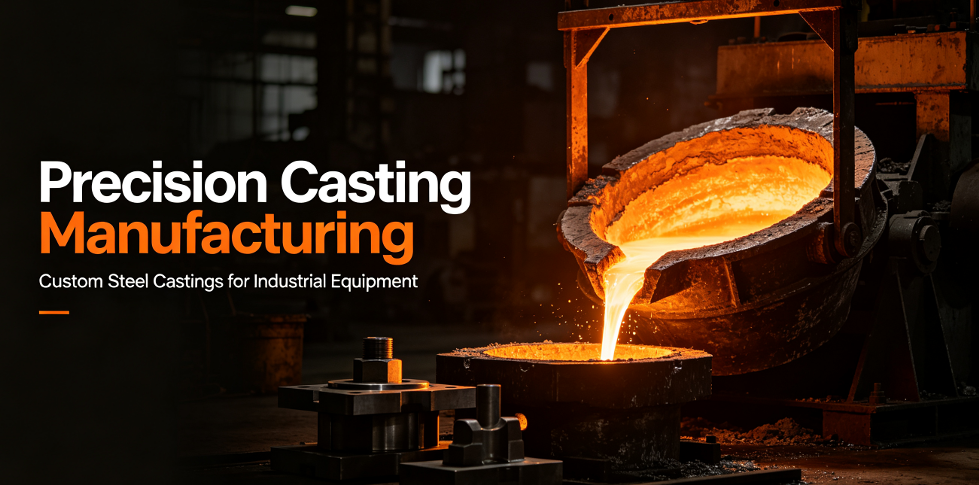
Precision casting (investment casting) is widely used to produce high-precision, complex metal parts for machinery, marine, petroleum and engineering equipment. For B2B procurement, selecting qualified precision castings is essential to guarantee equipment stability and reduce operational risks.First, verify material chemical composition. Qualified castings including carbon steel, 42CrMo alloy steel, 304/316L stainless steel must meet international standards. Reliable suppliers provide spectral analysis reports for full traceability.Second, check dimensional accuracy and geometric tolerance. Strict control of size, parallelism and concentricity avoids assembly errors and secondary processing waste, especially for irregular and complex parts.Third, confirm internal and surface quality. Standard non-destructive testing eliminates hidden defects like pores, slag inclusions and microcracks. Qualified products have smooth surfaces without sand holes, cracks and burrs.Fourth, focus on mechanical properties and processing standards. Key indicators including strength, hardness and toughness must match working conditions. Reasonable heat treatment and professional post-processing greatly improve durability. Regular manufacturers support OEM customization and complete quality inspection documents.