How to Evaluate a Foundry’s Reliability During Your First Factory Audit
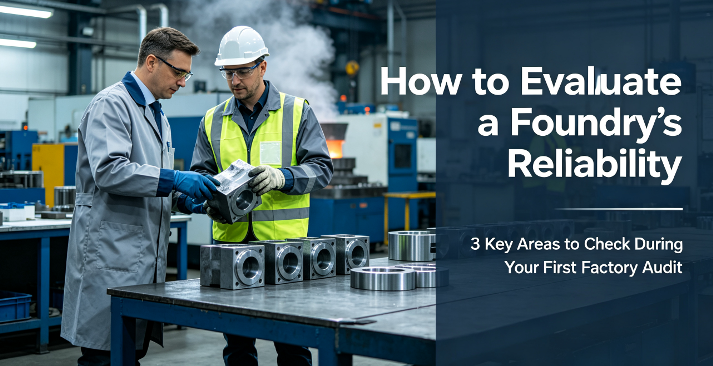
For overseas buyers sourcing precision castings, on‑site factory audit plays a vital role in selecting a trustworthy casting partner. Many purchasers feel overwhelmed when visiting an investment casting or sand casting foundry for the first time. It is easy to be misled by showrooms and marketing brochures. You do not need to carry out a full‑scale audit. Focus on three key areas: production workshop, quality‑control laboratory, raw‑material & finished‑goods warehouse, and you can quickly judge the foundry’s real manufacturing and quality‑management capacity.First, tour the production workshop to verify real‑volume production capability.Check whether full production procedures are available, including wax injection, tree assembly, shell‑making, shell firing, pouring and post‑treatment. Observe ongoing production orders and tidy working conditions. Pay attention to piles of reworked or defective castings around workshop corners. If only sample display is available while production stations remain idle, the supplier may lack stable mass‑production capacity, which brings risks for bulk casting orders.Second, inspect the QC laboratory and testing equipment to validate quality‑control systems.Qualified precision casting foundries are equipped with complete testing instruments: spectrometer, hardness tester, PT penetrant testing, UT ultrasonic testing and other devices. Confirm these machines are in daily operation. Ask for real batch documents including material certificates, heat‑treatment records and non‑destructive‑testing reports. Without proper testing facilities and authentic batch records, foundries cannot effectively control internal defects such as porosity, shrinkage and material mismatch. Consistent product quality cannot be guaranteed.Third, visit raw‑material warehouse and finished‑goods warehouse to assess supply‑chain management.In raw‑material storage area, confirm carbon steel, alloy steel and stainless steel stocks are separately stored with clear grade labels. Mixed melting of unmarked raw materials will cause serious material‑composition failures. In finished‑goods area, check pending shipments to understand order backlog and delivery rhythm. Messy warehouses without material identification create major hidden quality risks for your projects.We recommend overseas buyers pick one work‑in‑progress casting randomly during audit, cross‑check against drawing requirements and observe actual operator standards. With the above checks, buyers can efficiently distinguish real manufacturers from trading intermediaries and secure reliable casting suppliers for construction machinery, petroleum, marine and forklift casting projects.