Industry Science: Core Heat Treatment Processes Upgrade the Quality of Precision Castings
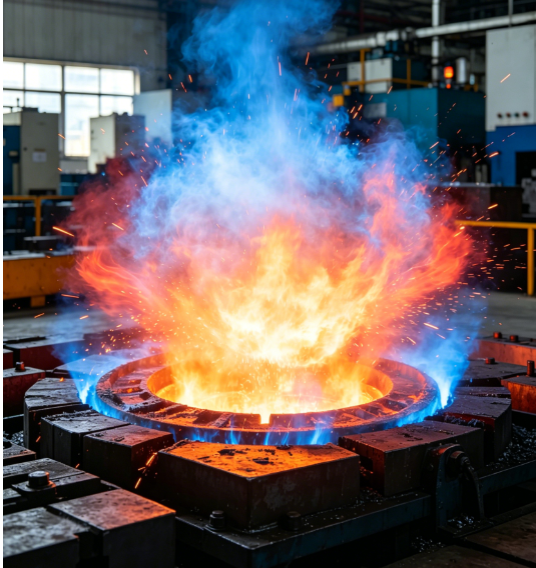
Recently, the precision casting industry has continuously optimized post-processing procedures. As a key process to improve the mechanical properties and stabilize the dimensional accuracy of castings, heat treatment has become a core link in the production of high-end castings. At present, mainstream industrial heat treatment processes have formed a standardized system, adapting to the production requirements of various precision castings made of carbon steel, alloy steel, stainless steel and other materials.According to industry technicians, there are five core heat treatment processes commonly used for precision castings. Stress relief annealing is mostly applied to high-precision thin-walled castings to eliminate internal casting stress and prevent subsequent deformation and cracking. Normalization is used for ordinary carbon steel and low-alloy steel castings to refine grains, homogenize structures and optimize the cutting performance of workpieces. As a combined process of quenching and high-temperature tempering, quenching and tempering is the preferred process for heavy-duty castings used in mining, automotive and other industries, delivering both high strength and toughness. Low-temperature quenching and tempering focuses on wear resistance, suitable for precision wear-resistant parts such as valve cores. In addition, solution treatment, exclusive for stainless steel castings, can effectively improve the corrosion resistance and structural stability of products.Industry insiders stated that accurate matching of heat treatment processes can greatly reduce the defect rate of castings and improve product consistency, enabling precision castings to meet the stringent quality standards of high-end fields such as machinery, shipbuilding and petroleum equipment.