Common Blowhole Defects in Investment Castings: Locations & Root Causes
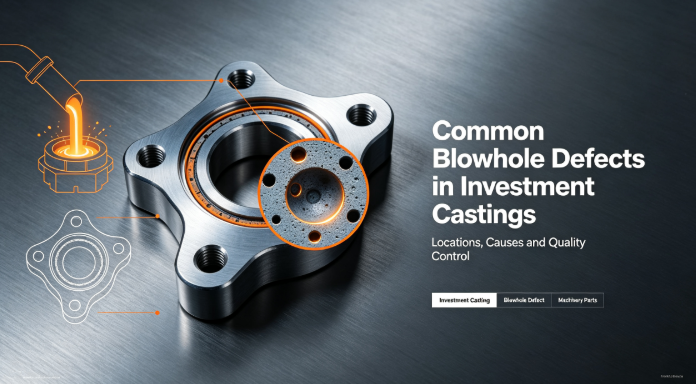
Blowhole defect widely exists in lost wax / silica sol investment casting production. It includes surface blowholes, subsurface blowholes and internal blowholes. Different types of blowholes tend to appear on specific positions of cast parts, which brings hidden dangers to the mechanical performance of finished workpieces.Blowholes often gather at heavy sections, flanges and thick bosses of castings. Blind holes, deep grooves, dead corners and enclosed cavities are high-risk areas, because trapped gas can hardly escape from these zones. Besides, wax pattern joints, wax assembly welding spots and the highest part of mold cavity during metal filling are also prone to blowholes. Subsurface blowholes cannot be identified by naked eyes. They are usually exposed after CNC machining, which is a major hidden quality risk for buyers.There are four primary causes for casting blowholes. First, shell mold gas generation and poor ventilation. Insufficient dewaxing or shell roasting leaves residual wax and organics inside ceramic shells. Once high-temperature molten steel is poured in, those residuals burn and generate massive gas. If the shell has low air permeability or poor vent design, gas will be trapped inside solidifying metal. Un-dried shell slurry also brings moisture and creates gas defects.Second, gas dissolved in molten metal. Poor deoxidation and degassing during melting leave hydrogen and oxygen inside liquid steel. Gas solubility drops while steel solidifies, and separated gas forms blowholes. Rusty or damp recycled scrap materials will greatly increase gas content in molten metal.Third, gas entrapment during pouring. Improper gating system or unstable pouring speed leads to turbulent flow. Fast pouring rolls liquid metal and traps cavity air. Too slow pouring causes early solidification of metal crust and seals gas inside the mold.Fourth, contamination from wax patterns. Release agent, oil and moisture left on wax surface will be covered by shell coating. These contaminants vaporize under high temperature and produce blowholes. Poor sealing of wax joints is another trigger.Blowholes weaken tensile strength of castings. For load-bearing parts used in construction machinery, forklifts and oil equipment, MT or PT non-destructive testing is recommended to screen defective castings before delivery.