Precision Casting Industry Accelerates Intelligent & Green Transformation, Demand for High-End Casting Exports Keeps Rising
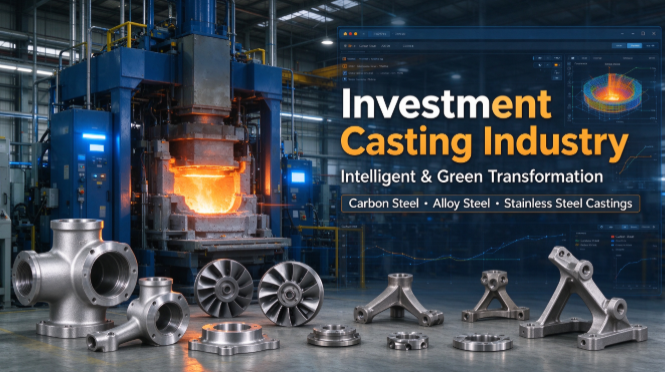
China’s investment casting sector is undergoing structural upgrading, driven by downstream industries including construction machinery, petroleum machinery, marine equipment and new energy systems. Orders for silica sol precision castings maintain steady growth, and overseas buyers show sustained demand for carbon steel, alloy steel and stainless steel investment castings.Tighter environmental regulations are phasing out outdated water-glass production lines with high pollution. More foundries are adopting eco-friendly silica sol processes, automated shell-making and intelligent melting equipment. Casting simulation CAE software is widely used to predict defects such as shrinkage porosity, gas holes and distortion, lowering scrap rates.Traditionally, precision casting relied heavily on manual experience to control wax pattern, shell building, dewaxing and pouring processes, leading to unstable yield rates. Today, digital simulation and AI visual inspection are gaining popularity. Foundries can optimize gating and riser designs at the sampling stage, shortening prototype cycles and cutting repeated tooling costs.Purchasers are shifting focus from low unit price to dimensional consistency, non-destructive testing performance, material certificates and stable delivery capacity. Buyers of construction machinery, forklift and oil equipment castings tend to select manufacturers with complete quality control systems, capable of providing spectrum analysis, NDT and mechanical property reports.The industry will continue to polarize. Low-end homogeneous castings face fierce price competition. Manufacturers with advanced material development, complex component forming and one-stop machining services will capture more opportunities in domestic supply and export markets.