Analysis on Classification and Technical Conditions of Carbon Steel Castings
I. Classification Methods for Carbon Steel Castings
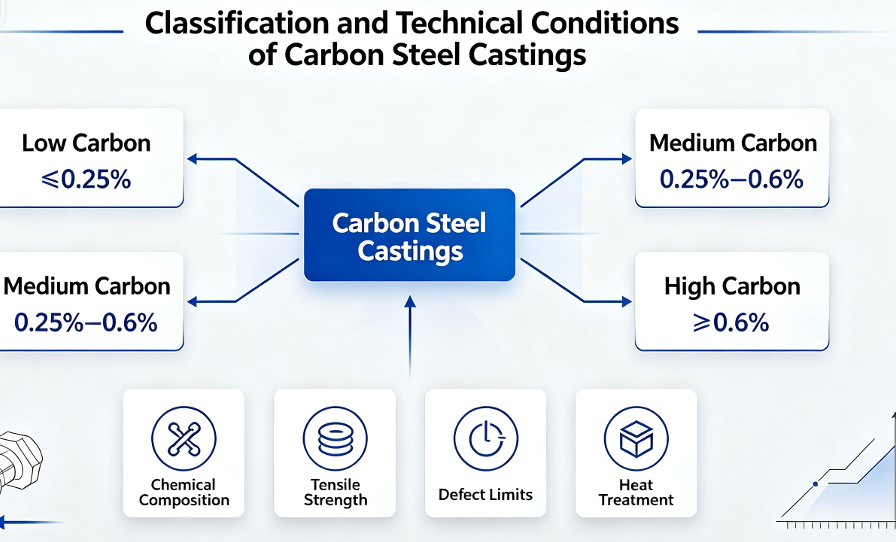
Carbon steel castings can be regarded as the "basic raw materials" in the industrial sector. Based on carbon content, they fall into three categories: low-carbon steel (carbon content ≤ 0.25%), medium-carbon steel (0.25%–0.6%), and high-carbon steel (≥ 0.6%).
- Low-carbon steel: Excellent ductility, widely used for components requiring welding or stamping.
- Medium-carbon steel: Balanced strength and toughness, suitable for mechanical transmission parts.
- High-carbon steel: Outstanding hardness, primarily applied to wear-resistant components.
II. Core Elements of Technical Specifications
The technical requirements for such castings are comparable to cooking recipes, with four key aspects to observe:
- Chemical composition control: Sulfur and phosphorus contents must be precisely regulated like seasonings.
- Mechanical properties: Indicators including tensile strength and elongation shall meet specified standards.
- Defect limitations: Strict proportional limits are imposed on flaws such as porosity and slag inclusions.
- Heat treatment processes: Procedures like normalizing and annealing determine the final product quality.
III. Typical Application Scenarios & Precautions
Carbon steel castings are extensively utilized across industries, ranging from mining machinery to marine components. Key precautions for application are as follows:
- Anti-rust treatment is mandatory for service in humid environments.
- Low/medium carbon steel shall be prioritized for parts under impact loads.
- Thermal expansion coefficient must be taken into account for high-temperature working conditions.
- Casting shrinkage ratio shall be strictly controlled for precision components.