Process Differentiation to Meet Diverse Needs - Analyzing the Core Differences Between Ordinary Casting and Precision Casting
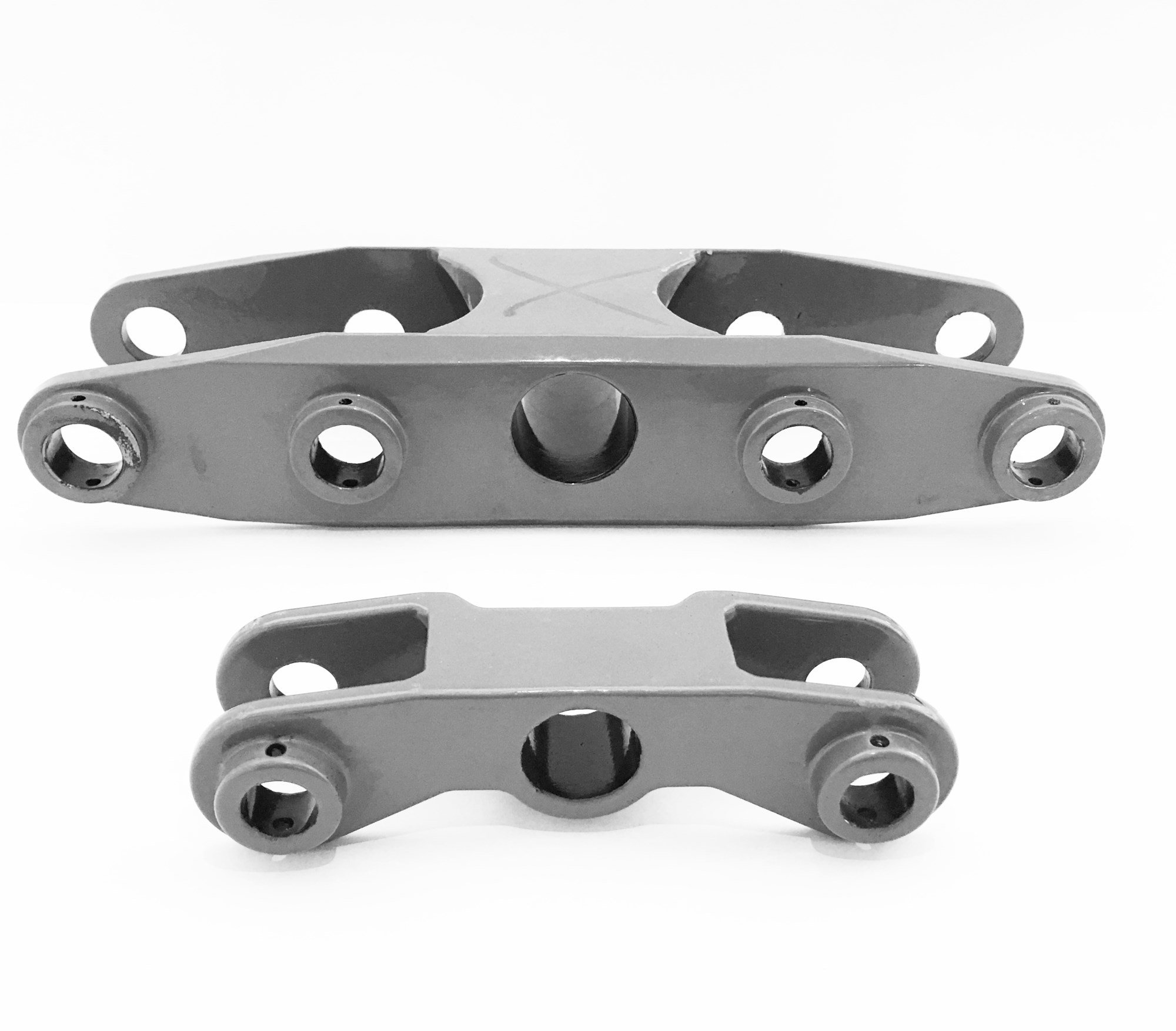
In the wave of high-quality development of the manufacturing industry, casting, as a basic process of equipment manufacturing, the choice of its technical path directly affects product quality, cost and application scenarios. As the two mainstream casting processes, ordinary casting and precision casting have significant differences in process principles, product characteristics and applicable fields, supporting different levels of manufacturing needs respectively and becoming an important support for promoting the diversified development of the industry. Industry experts said that clarifying the core differences between the two is of great significance for enterprises to optimize production layout and improve product competitiveness.It is reported that ordinary casting, also known as traditional casting, is a time-honored metal forming method with relatively simple processes. Its core principle is to directly pour molten metal into a pre-prepared mold (mostly sand mold), take it out after the metal cools and solidifies, and obtain castings after simple cleaning. The technological process mainly includes basic steps such as mold making, pouring, cooling and cleaning, with low equipment investment and low operation threshold, which is suitable for mass production of parts with relatively simple shapes and low precision requirements."The advantage of ordinary casting lies in controllable cost and high production efficiency, which can quickly meet the needs of large-scale production," said the technical director of a casting enterprise. The dimensional tolerance of ordinary castings is relatively large, and the surface finish is low. Usually, subsequent mechanical processing such as grinding and cutting is required to meet the service standards, and the material utilization rate is also relatively limited, generally around 30%-40%. Its application scenarios are very extensive, covering machine tool bases, pipe fittings, large mechanical housings and other general parts with low requirements on precision and surface quality, making it an indispensable basic process in industrial production.Compared with ordinary casting, precision casting (also known as investment casting, lost-wax casting) is a more refined and complex advanced casting process. Its history can be traced back to 3000 BC in ancient Egypt and China, when it was mainly used to make jewelry and works of art. Modern precision casting was innovated and upgraded during World War II to meet the needs of aero-engine turbine blades. The core of this process is to make a fusible mold (usually a wax mold), coat its surface with multiple layers of refractory materials to form a shell, then melt the wax mold by heating to leave a closed cavity, and finally pour molten metal into the cavity to obtain high-precision castings after cooling.The prominent advantages of precision casting are reflected in high precision, high surface quality and complex structure forming capacity. Data show that the dimensional tolerance of precision castings can reach ±0.1mm, the surface finish Ra value is between 1.6-3.2μm, which can be directly assembled and used without or with only a small amount of subsequent mechanical processing, and the material utilization rate is as high as 85%-95%, which greatly reduces material waste, especially suitable for the forming of rare and high-value metals. In addition, this process can also realize the forming of thin-walled, complex inner cavity, curved surface and other structures that are difficult to achieve by traditional processing, with a minimum wall thickness of 0.5mm, making it the core supporting process for high-end equipment manufacturing.In terms of application fields, the division between the two is more obvious. Relying on cost advantages, ordinary casting is widely used in traditional fields such as construction, general machinery and agricultural machinery, undertaking the supply task of basic parts; while precision casting focuses on high-end manufacturing fields and plays an irreplaceable role in aerospace, medical devices, high-end auto parts, energy equipment and other fields. For example, aero-engine turbine blades need to withstand extreme environments of 650-1100°C and have complex internal cooling channels, which can only be met by precision casting; medical products such as artificial joints and dental instruments also rely on precision casting to achieve high biocompatibility and high-precision adaptation.With the transformation of the manufacturing industry towards high-end, intelligent and green development, both processes are constantly iterating and upgrading. Ordinary casting is improving precision and environmental protection level by introducing intelligent equipment and optimizing sand mold materials, reducing emissions of pollutants such as dust and waste sand; precision casting is further improving production efficiency, reducing costs and expanding application scenarios with the help of new technologies such as computer-aided design, 3D printed sand molds and microwave-assisted dewaxing. According to industry data, the global precision casting market is expected to grow at a compound annual growth rate of 8.5% between 2022 and 2027, and the global market size is expected to exceed 35 billion US dollars by 2025, with China's market share continuing to rise.Industry analysts pointed out that ordinary casting and precision casting are not a substitute relationship, but complementary and symbiotic, each showing their strengths. When choosing casting processes, enterprises need to comprehensively consider product precision requirements, shape complexity, production volume and cost budget - for mass-produced, low-precision general parts, ordinary casting is the most cost-effective choice; for small-batch, high-precision, high-value-added high-end parts, precision casting is an inevitable choice. In the future, with the continuous innovation of technology, the two processes will be further integrated and upgraded, providing a stronger support for the high-quality development of the manufacturing industry.