Technological Revolution Reshapes Investment Casting!
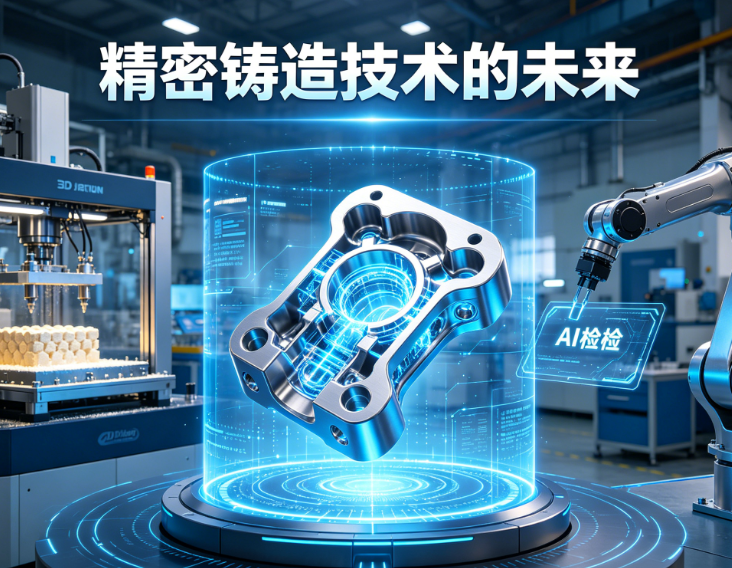
3D Printed Wax Patterns + AI Quality Inspection + Digital Simulation Boost Efficiency by 75% and Reduce Reject Rate by 20%Shanghai, May 18, 2026 — The 2026 Shanghai International Foundry Expo showcased the latest technological breakthroughs in the investment casting industry. Four core technologies including 3D printed wax patterns, AI quality inspection, digital simulation and duplex stainless steel processes have become key drivers for industrial upgrading.
- 3D Printed Wax Patterns: R&D Cycle Cut by 75%, Accuracy up to 4μmWax jet 3D printers support large-format printing of 410×206×157mm, delivering wax pattern surface precision of 4μm (National Standard Grade N8) and stable forming of fine filaments as thin as 0.12mm. It only takes several hours to complete wax pattern production from digital models, slashing new product development cycles by 75%. No mold opening is required with zero cost for design revisions, ideal for small-batch complex components in aerospace and medical industries.
- AI & Digital Simulation: Trial Production Cycle Halved, Reject Rate Down 15%-20%Over 60% leading enterprises have adopted casting CAE simulation software to simulate molten metal flow and solidification processes. The number of trial productions is reduced from 3-5 times to 1-2 times, cutting reject rates by 15% to 20%. Enterprises such as Sany Heavy Industry have deployed AI visual inspection systems, achieving a defect recognition accuracy rate of 99.2% for molds and lowering labor costs by 40%.
- Duplex Stainless Steel & Thin-Wall Technology: Breaking Performance and Dimensional LimitsDemand for duplex stainless steel castings in marine engineering and chemical equipment rises by 12% annually. By precisely regulating the ratio of ferrite and austenite phases, their corrosion resistance service life is extended by 30%. The industry has achieved a breakthrough of 1.5mm minimum wall thickness for thin-wall precision castings with maximum outline dimension reaching nearly 2 meters and surface roughness up to Ra0.4μm, perfectly meeting the application demands of lightweight structural parts for new energy industries.