Overcoming Casting Pouring Defects and Consolidating Quality Foundations
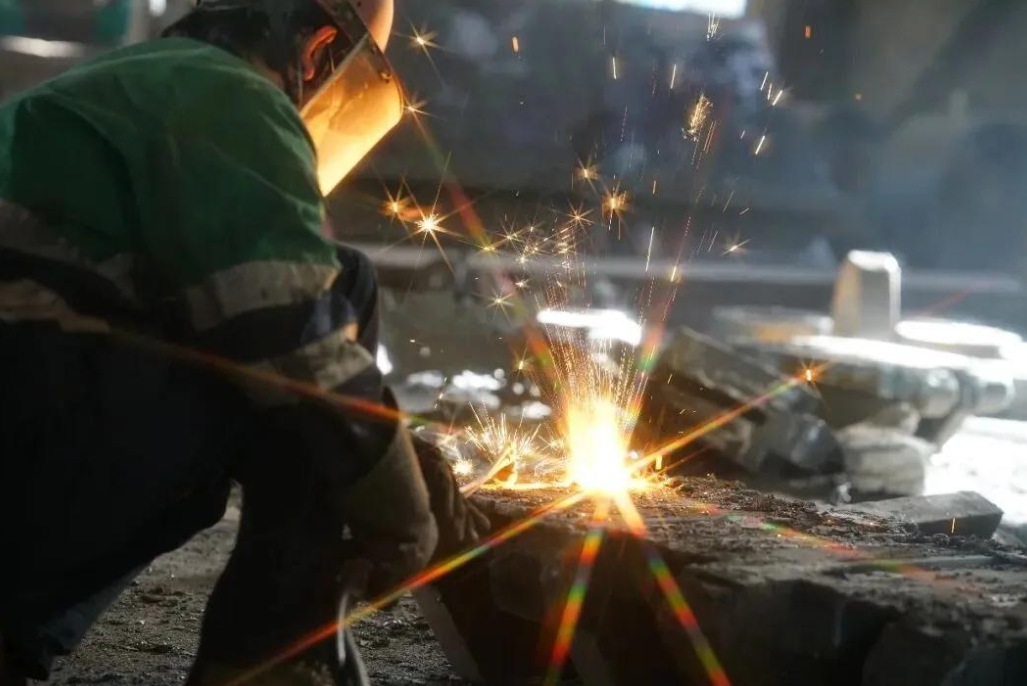
Weifang Junlong Machinery Upgrades Precision Casting Process to Comprehensively Resolve Casting Quality Issues(News Report) As a benchmark enterprise in the precision casting industry, Weifang Junlong Machinery Co., Ltd. has long focused on the R&D and production of castings made of carbon steel, alloy steel, stainless steel, wear-resistant alloy and other materials. Its products are widely used in high-end equipment fields such as forklifts, petroleum, chemical industry, railway locomotives and agricultural machinery. Recently, targeting the common quality pain points in casting pouring across the industry, the company's technical team has concentrated on research and optimization, comprehensively upgraded the whole process of pouring technology, and systematically solved core defects including insufficient pouring, blowholes, shrinkage cavities, slag inclusions and cracks. The comprehensive qualification rate of castings has been greatly improved, providing more stable and reliable precision casting solutions for high-end equipment manufacturing.Casting pouring is the core process of precision casting, which directly determines the final quality of castings. For a long time, problems such as inaccurate temperature control of molten metal, unstable pouring speed, poor mold venting and unreasonable feeding systems have easily caused various casting defects, which not only increase production costs and delay delivery cycles, but also restrict the improvement of product performance. To this end, Junlong Machinery has established a full-chain quality control system from three dimensions: source control, process optimization and terminal prevention, to accurately solve various pouring problems.
1. Precise Temperature and Flow Control to Eliminate Insufficient Pouring and Cold Shuts
To address defects like incomplete filling and poor fusion, the company has upgraded its melting and pouring temperature control system, using high-precision thermometers to monitor molten metal temperature in real time. The pouring temperature of stainless steel and alloy steel is stably controlled within the precise range of 1580–1620°C. The gating system design is optimized with a combination of bottom gating and step gating, following a standardized "slow-fast-slow" pouring rhythm to avoid interruptions. The cross-sectional areas of runners and ingates are increased to improve mold-filling capacity, completely resolving insufficient filling in thin-walled and complex structural parts.
2. Enhanced Degassing and Dehumidification to Remove Blowholes and Pinholes
For internal cavity defects such as blowholes and pinholes, the technical team implements dual control over molten metal and molds. In the melting stage, inert gas protection and vacuum degassing are adopted, with high-efficiency deoxidizers added to minimize residual gases such as hydrogen and oxygen. In the shell-making process, roasting temperature and duration are strictly controlled to ensure full drying of shells, eliminating moisture and residual wax to avoid excessive steam during pouring. Shell permeability is improved through optimized particle gradation, and pouring speed is regulated to prevent turbulence and air entrainment, achieving dense, pore-free internal structures.
3. Optimized Feeding System to Resolve Shrinkage Cavities and Porosity
Shrinkage cavities and porosity often occur in heavy sections and hot spots, critically affecting casting strength. Junlong Machinery has innovatively applied a combined process of "directional solidification + riser feeding + chill control". Risers are properly positioned and sized according to casting structure, and chills are installed at hot spots to accelerate local cooling. Pouring temperature is precisely controlled to avoid excessive volume shrinkage caused by overheating. Post-pouring feeding operations are optimized to ensure full molten metal replenishment, resulting in dense internal structures without concentrated voids or looseness.
4. Strict Slag and Sand Removal to Prevent Slag Inclusions and Sand Holes
Against defects such as slag inclusions, sand inclusions and oxide inclusions, the company enforces a three-stage slag removal standard. Repeated slag skimming is performed after melting, using high-efficiency slag removers to purify molten metal. Ceramic filters are installed during pouring to block impurities from entering the mold cavity. Loose sand is thoroughly cleaned before shell making and mold closing. Mold sand strength and adhesion are enhanced, and gating buffer structures are optimized to reduce molten metal erosion on mold walls, fundamentally preventing sand and slag particles from embedding in castings.
5. Standardized Cooling and Unboxing to Avoid Cracks and Deformation
To prevent hot tearing, cold cracking and warping deformation, cooling and unboxing durations are strictly controlled based on material and structure, ensuring uniform and gradual cooling. Casting structure design is optimized to reduce sharp corners and abrupt wall thickness changes, lowering thermal stress concentration. Shakeout operations are standardized to avoid external impact, and subsequent aging heat treatment is applied to eliminate residual stress, effectively preventing cracking and distortion.
6. Improved Shell Strength to Stop Runout and Leakage
To solve molten metal runout and mold leakage during pouring, the shell preparation process is upgraded by adjusting the ratio of sodium silicate, silica sol binders and curing agents to enhance high-temperature shell strength. Mold closing accuracy, weighting and clamping are strengthened to ensure tight parting surface sealing. Gate locations are optimized to avoid direct impact on cores, reducing shell stress and completely eliminating steel liquid leakage.This comprehensive process upgrade embodies Junlong Machinery's philosophy of "quality as the foundation, innovation as the soul". By systematically resolving quality pain points throughout the pouring process, the internal defect rate of the company's precision castings has been reduced by more than 85%, with surface quality and dimensional accuracy fully compliant. Products feature more stable performance and longer service life, earning high recognition and bulk orders from many domestic and foreign high-end equipment enterprises.In the future, Weifang Junlong Machinery will continue to deepen technological innovation in precision casting, constantly optimize processes, upgrade equipment and strengthen management. With higher-quality casting products and more efficient delivery services, it will support the high-quality development of China's equipment manufacturing industry and build a world-class precision casting brand.